
Audio Sermon
Download
Listen to complete sermon series: Psalm 51
Sermon Transcript
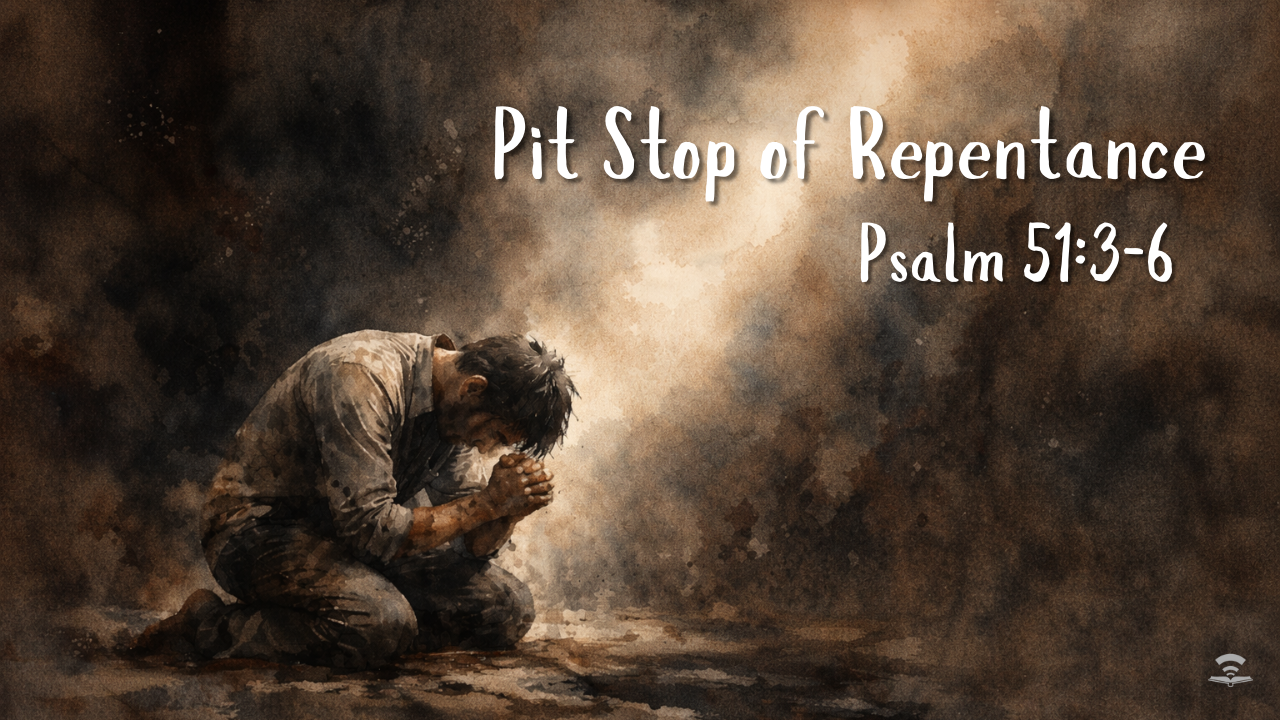
Psalm 51, V.3-6 For I acknowledge my transgressions, and my sin is ever before me. Against you, you only have I sinned, and done this evil in your sight, that you might be justified when you speak, and be blameless when you judge. Behold! I was brought forth in iniquity, And in sin did my mother conceive me. Behold, you desired truth in the inward parts, And in the hidden you shall make me to know wisdom.
What we considered the last time, the verses 1 and 2, if we could probably give it a title, we would want to say it is the highway of God's mercy. It's so huge, it's so abundant that there is no end and limit to God's mercy. It's mysterious because nobody can say whether God would be merciful or not. It's a matter of surety because it's a matter of His Covenant at stake. And it's a matter of abundance because there is no limit to the extent that He will be merciful on us. It's multitude of it.
And when we go down that highway of God's mercy, trying to find out the depths and the glory of that grace that God is willing to show us as sinners, where does this all lead to? Where does the highway go to? What is the end of this road of God's mercy? They that God wants to show us mercy, that we should only revel in the forgiveness of our sins and go right back into it. For many have chosen to do that when they find God as merciful over their sins. They find it trivial and abuse it, so as to go back only to where they began with.
But God's mercy will not lead a sinner to more sin. Yes, God's mercy is abounding over more of our sin, but it is not to give a more bigger platform to sin. You see this in the mind of David as he pens down these few verses. He begins by the realization of how great God's mercy is, but then he comes to its rightful conclusion as well. At the start of it, I want to read this verse from Romans chapter 2. We read verse 4. Do you despise the riches of His goodness and forbearance and long-suffering, not knowing that the goodness of God leads you to repentance?
And that's the destination of God's highway of mercy. It leads the sinner to repentance. That when God pours out the goodness of His mercy, of long-suffering, the riches of it, Paul is saying, all of this should lead a sinner to repentance and not lead a sinner to despise it. So back in Psalm 51, in verses 3 to 6 which we just read this morning, we are seeing a repentant heart of David. No doubt this whole Psalm is a Psalm of repentance but in these four verses, we see the crux, the very heart and the mind of a repentant sinner.
It gives us a good picture of water's repentance and tail. In verse 3, it entails the acknowledgement of your own self. In verse 4, it entails the acknowledgement of the one who has been offended, God Himself. In verse 5 and 6, it gives us an acknowledgement or an explanation of what went wrong in that act. You see, these are the three things that every sinner will struggle when it comes to repentance. We will not look at our own selves but everyone else. We will not look at the one who has been offended.
And most importantly, when it comes to explaining our sins, explaining our act, explaining why we did what we ended up doing, we never are able to give a good explanation. That if we have to explain our foolishness, we are still unable to explain it to its fullness. So David does all three of it. He deals with His Self, He deals with the Lord of Whom He has offended, and He gives a final explanation of why He did what He did. We'll begin with verse 3. It says, For I acknowledge my transgression. Yes, that's the two side of it.
In English as we read, I acknowledge it and in Hindi, know about it. And both these two things are there in that word. And it's a big thing for a person like David to say it. You see, this is the struggling roadblock to receiving God's mercy. It is our acknowledgement of, we did it. For the last nine months previously to writing this Psalm, He did everything in His capacity to deny the fact that He did it. It's extremely difficult to say, I have sinned. When the Lord caught Adam, Adam never said, I did it.
Adam blamed Eve, Eve blamed the serpent. At the end of the line, nobody was willing to say, I did this. Nobody is willing to take a blame on oneself and say, Yes, I have done this. and their child came, took it to the right next level and saying that, why even blame me? I'm not even responsible for what I did. I'm not even the keeper of my brother's life. Why even look and ask me? And that is the shift you see in repent and sinner from complete denial and ignorance of what he has done.
He comes to a point and say, I acknowledge this is my rebellion. This is my transgressions. I have done it. He is not looking at anyone around him. He is not explaining a sin through circumstances, that He has to look at Himself and say, this is My action that I did with My own willingness, no matter who abated Me, no matter who helped Me, this is My sin. He says the next sin, My sin is ever before Me. Again, what a change for David to write these words! It looks a very sorryful estate for somebody to say, My sin is ever before Me.
Imagine the guilt that person carries. And like what David goes through, yes, some of our sins, they just tick, they are always there before us. They are always before our vision. Its guilt, its courage is so difficult to remove. But yet, you see, this is a very good thing that David is saying that his sin is before himself. You see, this is the first thing Adam and Eve wanted to do. They didn't want to see their sin. The first thing they ever did in sin... is to wrap up fig leaves, to cover it. They didn't want to see what they did.
If there was any evidence as much as their nakedness that points out to their sin, they wanted to cover up the evidences. And David went to all extremes to make sure his sin is not before anyone else, not before himself as well. He used all resources, all authority, everything in his hand, even if it meant to take someone's life. He did that as well to make sure nobody gets to see that sin. He wanted this one secret sin of his life to be something that he wants to die with, that it should go with him to the grave and nobody finds it.
He wanted to enter into that very false future where nobody knows and he himself conveniently forgets about it. You see how sorry a state of a sinner who is in that kind of condition... Do you think that even if nobody else knows about it, at least you yourself, do you take cognizance of your sin? Is it at least before your own eyes? Like how they would say, they would say, is always before me. Have you reached that state where you are ignorantly, inconspicuously trying to see it away from your eyes?
You don't want to remember it just as much as you don't want anyone else to know it. Are we trying to deliberately cover our own eyes from our own sin? Are we trying to fool ourselves in thinking that just because we don't see it, just because we don't think of it, just because we don't deal with it, it is no longer there? Like David, let every unrepentant sin, let every sin that has not been dealt with, let it always be before our eyes. Let us not fool ourselves in thinking just as much as nobody sees, then it's better that I don't see it.
Like David, let's deal with it, acknowledge I did it and bring it before our eyes. And that's the first mark of a repentant sinner, acknowledgement of our own self. But then we come to verse 4 where it gets all the more difficult. Now we come to dealing... with the Lord Himself. But a true repentant sinner will go down that path and even deal it with God and says, you, you only have I sinned and done this evil in your sight. David acknowledges that despite his greatest effort to make it hidden before others' eyes and before his own eyes, it was always and always there and done before God's eyes.
He says against you, And you only, you see the double emphasis, He wants to make it clear that the one who has been offended in this crime is the Lord. We may argue that maybe David got this wrong. There was Bathsheba. There was Uriah, her husband. There was the whole public, the whole subject of the kingdom. He was a ruler and he had let them down by living a hypocritical life. So he could argue that I have wronged everyone. It was one thing to say I have wronged God, but then he makes... the wrong exclusively against God and say against you and you only.
It's not Baatshiba, it's not Uriah, it's not the people around me, not my family, but God alone. And here David is coming to the very severity of sin, the very heinousness of sin and realizing that sin is sin because God has determined it to be sin. Yes, the family is grieved. Yes, the kingdom is grieved. Yes, Baatshiba has been wronged. Yes, Uriah has lost his life, but the offended party in all of this is only God. That it is God and against God, not against Bhaashiba, not against Uriah, not against the people around me, not against my family, but against God that I have sinned and only against Him.
Why is that so? Why is the grieved parties not being considered over here? You see, David comes to God, realizing who God is, that He is the Law Giver, and it is against the Law Giver a sin is committed. When the prodigal son came back to the father, he used exactly the same words. He said, "'Against Heaven have I sinned and before your sight'". He didn't say, "'Against you, O Father'", he said, "'Against God, against Heaven have I sinned and before your sight'". Oh yes, he wasted all his father's money, reduced his father's name to the dust, but still, his sin was not against the father, but against God.
And that is sin! Even if nobody is affected, even if there are no consequences to it, even if nobody around you are affected because of your act, nobody is grieved. Forget others, even if it is not a sin against your own self, against your own body where you are affected, even if it is not affecting yourself. On the contrary, it has brought you pleasure. Yet, that act is sin because it is sin defined by God. If nobody is grieved, and even if everyone and yourself have been extremely happy with what you have done, yet it is sin if God has defined it sin and there is one against whom it has been committed.
And this is the seriousness of sin. Increasingly, we live in a world and in a society that tries to narrowly define sin and reduce it to just see who is affected, who is bearing the consequences, and then they define what sin is. And that's why many sinfulness, many things defined as sin in the Bible, is no longer considered sin in the world. Sin is the missing of God's glory. Whether anybody is affected, whether anybody is grieved, whether your own self is affected, God has been grieved. And it gets all the more difficult.
It is no more that the sin is before David's eyes, but David acknowledges, I have done it before your eyes. You are no longer trying to win the approval of people around you and trying to live that hypocritical life. You are now bare naked before the God who sees all things. You see, uh even when a criminal stands before a judge and the judge passes the judgment, the criminal never... Conceits that I have sinned against this judge who sits there No, the judge who sits there is just sitting there with vested powers from the law that he's trying to protect.
It is the law that has given him power and on behalf of that law he will execute judgment So the criminal has done nothing against the judge nothing against his friends and family who has grieved in the process of that sin He has still not done anything against them. He has done things against the law that is written Now imagine if that law, which is a very abstract term, is a person. If that law could be embodied in a person, where you are standing now, not between an intermediate judge who has been appointed, but you are standing before the one who embodies the very law you have broken.
Before whom all things are plain and naked, you don't need to explain your sin. And what kind of person is this? You see his character written in verse 4, that you might be Just when you speak and be blameless when you judge. That every word this judge will speak, this lawgiver will speak, this very personification of law will speak, every word will be just and every judgment will be blameless. Oh yes, you can try to ask mercy from Him, you can try to explain your sins. And like how it is done in today's time, you can try to employ some mitigating circumstances and try to reduce and look down the heinousness of your sin.
You try your best, but this judge, every word he speaks, every judgment he gives, it has to be righteous, it has to be fair, it has to be just, and most importantly, it has to make him blameless. He is not the one who will take your blame. That he is... constrained to give you a judgment that makes him blameless that in passing of that judgment nobody should point out a finger at him so when the evidence is set that you have done a sin worthy of death what statements can this judge bring and make it sound righteous by forgiving you.
What kind of judgments can he pass and still be blameless if in that judgment he acquits you can that be just You see, every judge struggles with this, that in dealing with the evidences, the judge needs to absolve himself, he has to deal correctly. You see that struggle in Pilate's judgment, the evidence was laid out before him, he has done no wrong, he has done no wrong, he has done no wrong, and he was constrained to let the Lord Jesus Christ go. He was constrained to let him go, but... In the forcefulness of the event, He tries to wash His hands off and say, let this sin not be on me.
And that's a symbolic thing that every judge does in every judgment. Wash their hands off and say, I have judged basis evidences, it is not my sin. And the Lord should not be ever concerned of judging correctly. He knows all things. It has been done before His sight. He is exceedingly holy. So every single word in that judgment, Every single punishment in that judgment will only explain and excel His holiness, His blamelessness. And so David comes to the very peak of all obstacles and says, God, You are so blameless, You are so just when you look at my sin.
And now comes the most difficult part. How is David going to explain his foolishness? What can he ever tell a judge like this? A judge who will always speak just who will always judge righteously, what can you say to such a person? You see in verse 5 and verse 6, He begins both those statements with the word Behold. Behold, I was shaped in iniquity and verse 6, Behold, you desire truth. And why is He beginning those kind of statements? Behold, it is always a term that calls into remembrance some things that you forgot.
That probably, probably in the act of the thing, You completely forgot some very fundamental things. And if there is any way to explain our sins, to explain why we did what we did, the worst way of ever doing it is how Adam did it. Is to blame someone else. Is to explain that there were some circumstances in my life that made me do this thing. There was a past in my life that constrained me to act like this in the future. I involuntarily found myself in circumstances that made me go down that slope.
I live in such a situation, I interact with such kind of people that have exceedingly great pressures on me. Oh, it runs in my family. It's genetic for us. Like father, like son, we have all done it. And so and so, with all kinds of excuses, we try to explain our sin. But how does David do it? When David was just a single cell body in his mother's womb, he goes back to that very first day and said that even that conception was sinful. That even that conception, no matter how beautiful, how wonderful, how marvelous it is, how fearfully God is doing it, yet it is missing the glory of God.
That I am doing everything that I am doing because if you go down way deep down into the very DNA of who I am, you will find sin. that the very nature of sin is coded in my DNA, that this is who I truly am, I degenerate, deviant, right from my very first cell. You see, you can say a statement like this and try to excuse yourself. But no, David is not trying to say this reality in excusing himself. He's not trying to say this, look, this is who I am, that's why I did it.
This is right there in me, that's why I eventually did it. He's not trying to explain his sin off. He's not trying to water down that consequence of sin by saying, I am doing this because it's there in my grains. On the contrary, a true sinner will acknowledge and appropriate and make his sinfulness his own. He will acknowledge that this is who I am. Yes, our flesh is weak. But that's not to say that because our flesh is weak, we should not do righteousness. On the contrary, if our flesh is weak, we need to weep over it like how Paul would say, oh, what a wretched man I am!
that if we are truly sinful in our very grain, in our very DNA, in our very conception, then that has to be a matter of shame, not an excuse to sin. There are two things to it. One, the reality that we are born in sin. And that reality is not an excuse to commit more sin. The second side of it is, what God expects of us having fully known that we are sinners right from our conception. If we drink Sin like we drink water, that's how the sum is put.
If that is how we deal with sin, something so integral to us, what does God expect of us then? That brings David to the second thing he completely forgot. He says, Behold, you desire Truth in that inward parts. Oh, our inward parts, our heart, our mind is completely convoluted. It's completely deviant. It's perverted, that's the word, iniquity. I was brought forth in iniquity with perversion that my heart and my mind has a natural bend and an inclination to continuously sin before God and in the light of such grim realities of who we truly are God is expecting.
God is desiring, God is taking pleasure to see truth in those inward parts. David missed this. When God desired truth in him, when God wanted his word, his truth to reorder, to reprogram, to redo His life. David acknowledges, Behold, you desired truth, but I didn't have that. Because if there was truth in my inward parts, if my mind was drained by the Word of truth of God, like how Paul would say, if the Word of God was richly dwelling in my mind, then the second part of that verse would have been so true.
God would make David to know wisdom in his hidden parts, that David would have acted wisely. From the very start till the end, was a strain of foolishness and David recognizes I was foolish because to begin with there was no truth in me. This is David's explanation of his sin. He explains it by saying I have sinned, I am sinful right from birth and over and above that when God expected truth in me, when God expected that my heart and my mind is redone, remade by the Word of God, There was no truth in me.
I was rather enjoying the sight of a beautiful lady bathing in an afternoon. I was rather enjoying the breaking of God's Word which clearly said I should have just one wife as a King. Conveniently, the things of this world, all the pleasures of the world took the place of truth in David's heart. Ultimately, David is saying, this sin was in making. It was making right from my very first cell in my mother's womb. And it all the more was sure it was going to happen when I did not allow God's truth to reside in my inward parts.
You see, it's acknowledging how sinful we are and it's also acknowledging that I haven't done enough despite knowing how sinful I have. Now, this is David's explanation of sin, a very fine explanation that comes from a repentant heart. This is what marks true repentance. Acknowledging yourself, dealing with the holiness of God and confessing or explaining your sin in accordance to how God explains it in the scriptures. May God's mercy, that highway of God's mercy, lead us to this repentance. May God's name be glorified.
What we considered the last time, the verses 1 and 2, if we could probably give it a title, we would want to say it is the highway of God's mercy. It's so huge, it's so abundant that there is no end and limit to God's mercy. It's mysterious because nobody can say whether God would be merciful or not. It's a matter of surety because it's a matter of His Covenant at stake. And it's a matter of abundance because there is no limit to the extent that He will be merciful on us. It's multitude of it.
And when we go down that highway of God's mercy, trying to find out the depths and the glory of that grace that God is willing to show us as sinners, where does this all lead to? Where does the highway go to? What is the end of this road of God's mercy? They that God wants to show us mercy, that we should only revel in the forgiveness of our sins and go right back into it. For many have chosen to do that when they find God as merciful over their sins. They find it trivial and abuse it, so as to go back only to where they began with.
But God's mercy will not lead a sinner to more sin. Yes, God's mercy is abounding over more of our sin, but it is not to give a more bigger platform to sin. You see this in the mind of David as he pens down these few verses. He begins by the realization of how great God's mercy is, but then he comes to its rightful conclusion as well. At the start of it, I want to read this verse from Romans chapter 2. We read verse 4. Do you despise the riches of His goodness and forbearance and long-suffering, not knowing that the goodness of God leads you to repentance?
And that's the destination of God's highway of mercy. It leads the sinner to repentance. That when God pours out the goodness of His mercy, of long-suffering, the riches of it, Paul is saying, all of this should lead a sinner to repentance and not lead a sinner to despise it. So back in Psalm 51, in verses 3 to 6 which we just read this morning, we are seeing a repentant heart of David. No doubt this whole Psalm is a Psalm of repentance but in these four verses, we see the crux, the very heart and the mind of a repentant sinner.
It gives us a good picture of water's repentance and tail. In verse 3, it entails the acknowledgement of your own self. In verse 4, it entails the acknowledgement of the one who has been offended, God Himself. In verse 5 and 6, it gives us an acknowledgement or an explanation of what went wrong in that act. You see, these are the three things that every sinner will struggle when it comes to repentance. We will not look at our own selves but everyone else. We will not look at the one who has been offended.
And most importantly, when it comes to explaining our sins, explaining our act, explaining why we did what we ended up doing, we never are able to give a good explanation. That if we have to explain our foolishness, we are still unable to explain it to its fullness. So David does all three of it. He deals with His Self, He deals with the Lord of Whom He has offended, and He gives a final explanation of why He did what He did. We'll begin with verse 3. It says, For I acknowledge my transgression. Yes, that's the two side of it.
In English as we read, I acknowledge it and in Hindi, know about it. And both these two things are there in that word. And it's a big thing for a person like David to say it. You see, this is the struggling roadblock to receiving God's mercy. It is our acknowledgement of, we did it. For the last nine months previously to writing this Psalm, He did everything in His capacity to deny the fact that He did it. It's extremely difficult to say, I have sinned. When the Lord caught Adam, Adam never said, I did it.
Adam blamed Eve, Eve blamed the serpent. At the end of the line, nobody was willing to say, I did this. Nobody is willing to take a blame on oneself and say, Yes, I have done this. and their child came, took it to the right next level and saying that, why even blame me? I'm not even responsible for what I did. I'm not even the keeper of my brother's life. Why even look and ask me? And that is the shift you see in repent and sinner from complete denial and ignorance of what he has done.
He comes to a point and say, I acknowledge this is my rebellion. This is my transgressions. I have done it. He is not looking at anyone around him. He is not explaining a sin through circumstances, that He has to look at Himself and say, this is My action that I did with My own willingness, no matter who abated Me, no matter who helped Me, this is My sin. He says the next sin, My sin is ever before Me. Again, what a change for David to write these words! It looks a very sorryful estate for somebody to say, My sin is ever before Me.
Imagine the guilt that person carries. And like what David goes through, yes, some of our sins, they just tick, they are always there before us. They are always before our vision. Its guilt, its courage is so difficult to remove. But yet, you see, this is a very good thing that David is saying that his sin is before himself. You see, this is the first thing Adam and Eve wanted to do. They didn't want to see their sin. The first thing they ever did in sin... is to wrap up fig leaves, to cover it. They didn't want to see what they did.
If there was any evidence as much as their nakedness that points out to their sin, they wanted to cover up the evidences. And David went to all extremes to make sure his sin is not before anyone else, not before himself as well. He used all resources, all authority, everything in his hand, even if it meant to take someone's life. He did that as well to make sure nobody gets to see that sin. He wanted this one secret sin of his life to be something that he wants to die with, that it should go with him to the grave and nobody finds it.
He wanted to enter into that very false future where nobody knows and he himself conveniently forgets about it. You see how sorry a state of a sinner who is in that kind of condition... Do you think that even if nobody else knows about it, at least you yourself, do you take cognizance of your sin? Is it at least before your own eyes? Like how they would say, they would say, is always before me. Have you reached that state where you are ignorantly, inconspicuously trying to see it away from your eyes?
You don't want to remember it just as much as you don't want anyone else to know it. Are we trying to deliberately cover our own eyes from our own sin? Are we trying to fool ourselves in thinking that just because we don't see it, just because we don't think of it, just because we don't deal with it, it is no longer there? Like David, let every unrepentant sin, let every sin that has not been dealt with, let it always be before our eyes. Let us not fool ourselves in thinking just as much as nobody sees, then it's better that I don't see it.
Like David, let's deal with it, acknowledge I did it and bring it before our eyes. And that's the first mark of a repentant sinner, acknowledgement of our own self. But then we come to verse 4 where it gets all the more difficult. Now we come to dealing... with the Lord Himself. But a true repentant sinner will go down that path and even deal it with God and says, you, you only have I sinned and done this evil in your sight. David acknowledges that despite his greatest effort to make it hidden before others' eyes and before his own eyes, it was always and always there and done before God's eyes.
He says against you, And you only, you see the double emphasis, He wants to make it clear that the one who has been offended in this crime is the Lord. We may argue that maybe David got this wrong. There was Bathsheba. There was Uriah, her husband. There was the whole public, the whole subject of the kingdom. He was a ruler and he had let them down by living a hypocritical life. So he could argue that I have wronged everyone. It was one thing to say I have wronged God, but then he makes... the wrong exclusively against God and say against you and you only.
It's not Baatshiba, it's not Uriah, it's not the people around me, not my family, but God alone. And here David is coming to the very severity of sin, the very heinousness of sin and realizing that sin is sin because God has determined it to be sin. Yes, the family is grieved. Yes, the kingdom is grieved. Yes, Baatshiba has been wronged. Yes, Uriah has lost his life, but the offended party in all of this is only God. That it is God and against God, not against Bhaashiba, not against Uriah, not against the people around me, not against my family, but against God that I have sinned and only against Him.
Why is that so? Why is the grieved parties not being considered over here? You see, David comes to God, realizing who God is, that He is the Law Giver, and it is against the Law Giver a sin is committed. When the prodigal son came back to the father, he used exactly the same words. He said, "'Against Heaven have I sinned and before your sight'". He didn't say, "'Against you, O Father'", he said, "'Against God, against Heaven have I sinned and before your sight'". Oh yes, he wasted all his father's money, reduced his father's name to the dust, but still, his sin was not against the father, but against God.
And that is sin! Even if nobody is affected, even if there are no consequences to it, even if nobody around you are affected because of your act, nobody is grieved. Forget others, even if it is not a sin against your own self, against your own body where you are affected, even if it is not affecting yourself. On the contrary, it has brought you pleasure. Yet, that act is sin because it is sin defined by God. If nobody is grieved, and even if everyone and yourself have been extremely happy with what you have done, yet it is sin if God has defined it sin and there is one against whom it has been committed.
And this is the seriousness of sin. Increasingly, we live in a world and in a society that tries to narrowly define sin and reduce it to just see who is affected, who is bearing the consequences, and then they define what sin is. And that's why many sinfulness, many things defined as sin in the Bible, is no longer considered sin in the world. Sin is the missing of God's glory. Whether anybody is affected, whether anybody is grieved, whether your own self is affected, God has been grieved. And it gets all the more difficult.
It is no more that the sin is before David's eyes, but David acknowledges, I have done it before your eyes. You are no longer trying to win the approval of people around you and trying to live that hypocritical life. You are now bare naked before the God who sees all things. You see, uh even when a criminal stands before a judge and the judge passes the judgment, the criminal never... Conceits that I have sinned against this judge who sits there No, the judge who sits there is just sitting there with vested powers from the law that he's trying to protect.
It is the law that has given him power and on behalf of that law he will execute judgment So the criminal has done nothing against the judge nothing against his friends and family who has grieved in the process of that sin He has still not done anything against them. He has done things against the law that is written Now imagine if that law, which is a very abstract term, is a person. If that law could be embodied in a person, where you are standing now, not between an intermediate judge who has been appointed, but you are standing before the one who embodies the very law you have broken.
Before whom all things are plain and naked, you don't need to explain your sin. And what kind of person is this? You see his character written in verse 4, that you might be Just when you speak and be blameless when you judge. That every word this judge will speak, this lawgiver will speak, this very personification of law will speak, every word will be just and every judgment will be blameless. Oh yes, you can try to ask mercy from Him, you can try to explain your sins. And like how it is done in today's time, you can try to employ some mitigating circumstances and try to reduce and look down the heinousness of your sin.
You try your best, but this judge, every word he speaks, every judgment he gives, it has to be righteous, it has to be fair, it has to be just, and most importantly, it has to make him blameless. He is not the one who will take your blame. That he is... constrained to give you a judgment that makes him blameless that in passing of that judgment nobody should point out a finger at him so when the evidence is set that you have done a sin worthy of death what statements can this judge bring and make it sound righteous by forgiving you.
What kind of judgments can he pass and still be blameless if in that judgment he acquits you can that be just You see, every judge struggles with this, that in dealing with the evidences, the judge needs to absolve himself, he has to deal correctly. You see that struggle in Pilate's judgment, the evidence was laid out before him, he has done no wrong, he has done no wrong, he has done no wrong, and he was constrained to let the Lord Jesus Christ go. He was constrained to let him go, but... In the forcefulness of the event, He tries to wash His hands off and say, let this sin not be on me.
And that's a symbolic thing that every judge does in every judgment. Wash their hands off and say, I have judged basis evidences, it is not my sin. And the Lord should not be ever concerned of judging correctly. He knows all things. It has been done before His sight. He is exceedingly holy. So every single word in that judgment, Every single punishment in that judgment will only explain and excel His holiness, His blamelessness. And so David comes to the very peak of all obstacles and says, God, You are so blameless, You are so just when you look at my sin.
And now comes the most difficult part. How is David going to explain his foolishness? What can he ever tell a judge like this? A judge who will always speak just who will always judge righteously, what can you say to such a person? You see in verse 5 and verse 6, He begins both those statements with the word Behold. Behold, I was shaped in iniquity and verse 6, Behold, you desire truth. And why is He beginning those kind of statements? Behold, it is always a term that calls into remembrance some things that you forgot.
That probably, probably in the act of the thing, You completely forgot some very fundamental things. And if there is any way to explain our sins, to explain why we did what we did, the worst way of ever doing it is how Adam did it. Is to blame someone else. Is to explain that there were some circumstances in my life that made me do this thing. There was a past in my life that constrained me to act like this in the future. I involuntarily found myself in circumstances that made me go down that slope.
I live in such a situation, I interact with such kind of people that have exceedingly great pressures on me. Oh, it runs in my family. It's genetic for us. Like father, like son, we have all done it. And so and so, with all kinds of excuses, we try to explain our sin. But how does David do it? When David was just a single cell body in his mother's womb, he goes back to that very first day and said that even that conception was sinful. That even that conception, no matter how beautiful, how wonderful, how marvelous it is, how fearfully God is doing it, yet it is missing the glory of God.
That I am doing everything that I am doing because if you go down way deep down into the very DNA of who I am, you will find sin. that the very nature of sin is coded in my DNA, that this is who I truly am, I degenerate, deviant, right from my very first cell. You see, you can say a statement like this and try to excuse yourself. But no, David is not trying to say this reality in excusing himself. He's not trying to say this, look, this is who I am, that's why I did it.
This is right there in me, that's why I eventually did it. He's not trying to explain his sin off. He's not trying to water down that consequence of sin by saying, I am doing this because it's there in my grains. On the contrary, a true sinner will acknowledge and appropriate and make his sinfulness his own. He will acknowledge that this is who I am. Yes, our flesh is weak. But that's not to say that because our flesh is weak, we should not do righteousness. On the contrary, if our flesh is weak, we need to weep over it like how Paul would say, oh, what a wretched man I am!
that if we are truly sinful in our very grain, in our very DNA, in our very conception, then that has to be a matter of shame, not an excuse to sin. There are two things to it. One, the reality that we are born in sin. And that reality is not an excuse to commit more sin. The second side of it is, what God expects of us having fully known that we are sinners right from our conception. If we drink Sin like we drink water, that's how the sum is put.
If that is how we deal with sin, something so integral to us, what does God expect of us then? That brings David to the second thing he completely forgot. He says, Behold, you desire Truth in that inward parts. Oh, our inward parts, our heart, our mind is completely convoluted. It's completely deviant. It's perverted, that's the word, iniquity. I was brought forth in iniquity with perversion that my heart and my mind has a natural bend and an inclination to continuously sin before God and in the light of such grim realities of who we truly are God is expecting.
God is desiring, God is taking pleasure to see truth in those inward parts. David missed this. When God desired truth in him, when God wanted his word, his truth to reorder, to reprogram, to redo His life. David acknowledges, Behold, you desired truth, but I didn't have that. Because if there was truth in my inward parts, if my mind was drained by the Word of truth of God, like how Paul would say, if the Word of God was richly dwelling in my mind, then the second part of that verse would have been so true.
God would make David to know wisdom in his hidden parts, that David would have acted wisely. From the very start till the end, was a strain of foolishness and David recognizes I was foolish because to begin with there was no truth in me. This is David's explanation of his sin. He explains it by saying I have sinned, I am sinful right from birth and over and above that when God expected truth in me, when God expected that my heart and my mind is redone, remade by the Word of God, There was no truth in me.
I was rather enjoying the sight of a beautiful lady bathing in an afternoon. I was rather enjoying the breaking of God's Word which clearly said I should have just one wife as a King. Conveniently, the things of this world, all the pleasures of the world took the place of truth in David's heart. Ultimately, David is saying, this sin was in making. It was making right from my very first cell in my mother's womb. And it all the more was sure it was going to happen when I did not allow God's truth to reside in my inward parts.
You see, it's acknowledging how sinful we are and it's also acknowledging that I haven't done enough despite knowing how sinful I have. Now, this is David's explanation of sin, a very fine explanation that comes from a repentant heart. This is what marks true repentance. Acknowledging yourself, dealing with the holiness of God and confessing or explaining your sin in accordance to how God explains it in the scriptures. May God's mercy, that highway of God's mercy, lead us to this repentance. May God's name be glorified.

Podcast: Play in new window | Download
Subscribe: Apple Podcasts | Spotify | RSS