
(1861 - 1997)
‘Pushkal ajuni una prabhu me ....’
‘Pushkal ajuni una prabhu me ....’
Introduction Maharashtra can boast of many stalwarts of faith who left their elite background to follow their Master's call and were used mightily for His glory. The words of Apostle Paul in Philippians Ch.3:4-7 apply to these great men of the Lord too:
“Though for myself I have to rely on the flesh. If any other man considers that he has or seems to have reason to rely on the flesh and his physical and outward advantages, I have still more!..............
............But whatever former things I had that might have been gains to me, I have come to consider as loss for Christ's sake.”
............But whatever former things I had that might have been gains to me, I have come to consider as loss for Christ's sake.”
Notable amongst them are Baba Padmaji, Pandita Ramabai, Laxmibai Tilak and Narayan Wamanrao Tilak popularly known as Na. Va Tilak.
India in those years
The state of India was under British rule then. It was the time of freedom struggle and social reformers. In Maharashtra this movement was led by Mahatma Jyotirao Phule, Vasudev Balwant Phadke, Bal Gangadhar Tilak, Gopal Krishna Gokhale, Mahadev Govind Ranade, and Dhondo Keshav Karve. Narayan Vamanrao Tilak was their contemporary.Those were the days when in India Postal service had started (1853). The first railway between Bombay and Thane had been commissioned (1857). Hindu remarriage act was enacted (1856) and Mumbai university was established (1857). There was a lot of social awakening and Freedom struggle against British raj was picking up and sprit of Nationalism was at its peak in the Country.
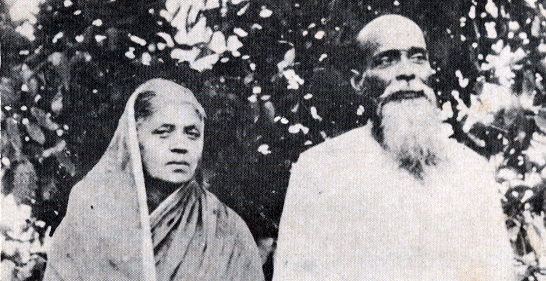
Birth and Family Background
Tilak was born on 6th Dec. 1861 Kharajgaon in Ratnagiri District which was then a Part of Bombay Presidency.His Father's Village was Chikalgaon in another part of same district. Tilak's father was a government registrar (Talathi) with considerable circle of villages to visit regularly and that was the probable reason that his wife was sent to stay at her father's village at Kharajgaon where Narayan was born; His mother died when he was 11 years old. Some of the literature on His life mentions that he was disliked by his father, because he was born with feet first which was considered a bad omen among the Indian culture in those times. He had a great influence of his mother and his maternal grandfather who was a Sadhu devoting himself to Hindu worship. It was his grandfather who named him as Narayan although his original name was Maruti. His mother's name was Janakibai who came from the family of Bedekars.
Like Pandita Ramabai, Narayan Vaman Tilak was another Marathi Scholar who translated Bible from original Hebrew text to Marathi language. Further, Tilak too belonged to Chitpavan Brahmin family a Hindu high caste priestly community. The Chitpavan are also known as Konkanastha Brahmin.
His father was transferred to Mokhada in Nasik, and he made arrangements for his wife and children to stay at Kalyan near Mumbai instead of with him at the new place of work. Narayan studied in Kalyan for four years before shifting to Nasik where his mother died. The death of his mother was a huge blow to young Narayan and his siblings as their life changed drastically thereafter. He shifted to his friend Mayale's house whom he met on banks of Godavari River. He was looked after by Yesubai, mother of Mayale who was a widow. It was here in Nasik that that he met the famous Vedic scholar Ganesh Shastri Lele, who was quick to observe Narayan's intelligence and undertook to teach him Sanskrit free of cost. Tilak used to call his mother and Lele Shastri as his two 'gurus' (teachers). Here he won a first prize in a competition for elocution and oratory and attracted attention and interest of Justice Ranade who was one of the founders of the competition. On being scoffed by one of his friends for his ignorance in English, Tilak undertook to memorize a complete English Dictionary. He approached the headmaster of Nasik high school for getting admission in the school. So much impressed was the school headmaster at the vocabulary of Narayan that he admitted him to school free of cost. He left school after sixth standard in pursuit of livelihood for himself and his siblings. However, he remained student of English literature all through out and had excellent written and spoken communication skills.
Marriage
At Jabalpur which is close to Nasik lived a family of 'Gokhales' with whom he got acquainted. There was remarkable resemblance between the Gokhale family and his own family.In 1880 in accord with their family social customs of his times, Tilak got married to Gokhale's daughter Manakaranika whose elder sister was wife of Nana Saheb Pendse who was Munsif at Nasik. Manakaranika after marriage became Lakshmibai. She had no formal schooling; however, through Tilak's encouragement, she learned to read and write Marathi, mastering the language to the extent of later writing her autobiography, Smruti Chitre which turned out to be an autobiographical masterpiece in Marathi.
Professional life
After his marriage Tilak wandered from place to place in Khandesh, often begging for his food like a Sadhu (it may be recalled that his maternal grandfather was a Sadhu), and for a time settled down to regular job as a headmaster of school in Dhamak in Varhad district while giving speeches, Kirtans and Puranas at different places. He also worked for a printing press. He started three schools in vicinity of Nasik and had a natural gift of teaching.In Nagpur he was also involved in translating into Marathi language various Vedic and other religious literature and due to his grasp of religion earned himself a title of 'Pandit'. He started publishing a monthly magazine called Rishi for a short stint for discussion on philosophic and religious questions. His fame as a poet also spread abroad and many began to read his writings.
Knowing Christ
All through 10 years of wandering after his marriage, there was a huge spiritual unrest in his mind. He firmly believed that if India is to enter into new period of greatness, the only way forward for achieving this was through religious awakening. His interactions and deliberations with his Bengali Sadhu friend led him to the conviction that such an awakening is not possible without breaking out from orthodox Hinduism and forming a new religion of which he himself would be the founder. With a belief that a prerequisite to become religion founder was to achieve supernatural, he practiced yoga and imposed severe austerities on himself for two years. The people in nearby villages soon came to know him as a saint and would flock to get his 'Darshan'. Soon he formulated doctrine for his new religion as below:1. There is an intelligent creator to the universe to whom all mankind belong as children.
2. All scriptures of whatever religion are work of man; the book of nature is the only true scripture revealing God.
3. There is no previous birth, nor are there rebirths. Man's state in this life depends on his heredity and environment and his own efforts.
4. Love to God and love to man is essence of all religions.
5. Idolatry is a supreme foe to be fought by true religion; but such virtues as love, truth, mercy may be personified and worshiped.
He started close study of founders of various faiths However the Life of Christ and the Bible did not attract him as he thought it to be too simplistic to understand.
In 1892 after he had to evacuate the position of editor of monthly on Religion and Philosophy due to his new opinions, he got employment with Raja of Rajnandgaon who lived 170 miles away from Nagpur. On the way to his place of his new employment, he met a Protestant missionary Earnest Ward in then the second-class compartment of the train. During the sojourn he shared the doctrines of his new religion with the European gentle man who on hearing his philosophies instantly remarked that within 2 years you will be a Christian, as “God is leading you”. As their journey ended the Gentleman prayed for him and gave him a copy of New Testament of the Bible.
As he went through the pages of the New Testament, making his notes in pencil, he was spell bound at the sermon of mount, especially at the message of love and tenderness and truth. He read the book till the last page that he might know more and more about Christ. After months of the study of the word of God at Rajnandgaon, the spirit of God brought him to the realisation that “Christ is the teacher whom India and the World needed”.
He came to know the fact that Christ was the supreme guru, however he did not have the experience of knowing Christ as his personal saviour who can forgive his sins. A Christian Police superintendent at Rajanandgaon gave him a tract which said, ‘Ask and it will be given to you’. He however rejected the idea as unbelievable, nevertheless prayed that if the ‘verse’ was true then he should get books on life of Jesus Christ including the history and geography of the place where Christ lived. To surprise and astonishment of Tilak, next day he got orders of transfer from Rajanandgaon and while he was packing up he found a box under the heap of rags containing 3 volumes of religious books including the Holy Bible pertaining to Life of Jesus Christ and all the other points that he had prayed for. Tilak praying and the Lord answering then became a regular affair.
Further rich understanding of the Lord came from men such as Rev. Sidoba Misal and his son Jaiwantrao of united free church mission as well as Baba Padmanji the first Novelist in Marathi Literature and a learned convert from the then Bombay. The thought of Baptism led to the fears of backlash from the family and the society. However, in November 1894 he saw same dream for three successive nights telling him ‘Fear not, Follow me’. He shared this with Rev. J. E. Abbott of American Marathi mission and who on his request published the fact that N. V. Tilak has indeed become a Christian. He was baptised on 10th Feb. 1895 at Bombay by Rev. Tukaram Nathoji, an Indian Pastor in old American Church since he insisted that the baptism ceremony be performed by an Indian pastor rather than a European or American. There were attempts on his life such as food poisoning, mob attacks etc. thereafter; however, the Lord miraculously protected His servant.
His wife Laxmibai Tilak, constantly pursued him to return to the fold. She offered Brahamans of Pandharpur her jewellery worth thousands of rupees to accept him back in the fold. Bal Gangadhar Tilak got permission from Shastris of Benares for his restoration. Tilak who had gone to Pandharpur to meet his wife however remained unperturbed and nothing could convince him. Narayan Vaman Tilak soon returned to Bombay and was transferred to Ahmednagar to look after the work of American Marathi Mission there. Soon his brother-inlaw N.R. Pendse too got transferred to Ahmednagar as a deputy Collector. The dear Lord was true to his promise, ‘Believe on the Lord Jesus Christ, and you will be saved, you and your household’ Acts 16:31. In the year 1899 Laxmibai Tilak too accepted the Lord and was baptised at Rahuri in Ahmednagar along with their son Dattu.
While in Ahmednagar he developed close relationship with Rev. R. A. Hume who cared him like a father. Dr. Hume is perhaps the best-known missionary in western India. The relationship was so strong that Tilak described it like a Foster Father – Foster Son relationship.
Village preaching was carried out throughout these years in and around Ahmednagar and Tilak used to sing Bhajans which he himself composed. The first such Bhajan was composed when Tilak and his team were walking and came across Hindu pilgrims on their way to Pandharpur. Tilak saw how much inspirations the local Christians would receive from similar hymns and instantly wrote on the spot one of his most popular songs – ‘Christ Guru Mawuli Ga Maai Mazi Christ Guru Mawuli’ (Christ the Superior Guru).
Tilak and Literature
Any article on Tilak would remain incomplete unless one writes of his contributions to Marathi Christian as well as Secular literature. Narayan Waman Tilak was a renowned Marathi poet and a social reformer. He is loved throughout Maharashtra as “the poet of children and flowers”. His house was a household of poetry for his wife Laximibai Tilak also made a reputation as a poetess and for many years Tryambak Bapuji Thombre the ‘Balkavi’ who wrote evergreen Marathi poems such as ‘Shraavan-Maasii Harshh Maanasii’ and ‘Anandi anand Gade, jikade tikade chohikade’ was staying with him. These poems are being taught in primary Marathi schools for over years.The students of Marathi medium schools get a glimpse of personality of Narayan Vaman Tilak through some lessons excerpted from the well-acclaimed autobiography of his wife, Laxmibai Tilak, entitled ‘Smrutichitre’ (memoirs). In the late 19th century, Keshavasuta and Tilak Narayan_Waman_Tilak produced poems influenced by English poets such as Wordsworth and Tennyson. They extended the horizon of Marathi poetry to encompass beauty in nature, love, romance, and mysticism as subjects.
He became editor of (and frequent contributor to) the Marathi section of the missionary magazine Dnyanodaya in 1912, a position he held until his death. After about ten years as a Christian, he began expressing his faith in local idioms, particularly the poetic style of the Varkari Hindu sampradaya of Maharashtra. The many songs he composed remain very popular among Marathi speaking Christians. Tilak composed over a hundred Christian devotional songs in Marathi in either abhanga or ovi form. They were published in a book titled “Abhanganjali”. He also commenced in 1909 composition of epical Khristayan. He composed 10 chapters of it and left it uncompleted at the time of his death; Laxmibai Tilak subsequently completed it by adding 64 chapters of her own. He fulfilled spiritual needs of the local Christian community by composing Jesus-centered bhajans, Abhangs and kirtan and epics. Even eight decades after his death, several Marathi hymns composed by Tilak are still sung in various churches including brethren assemblies. He wrote about 2100 poems.
Tilak joined Pandita Ramabai at Kedgaon, Pune to help her in the work of translation of Bible in Marathi. He was at Kedgaon for nearly 6 months along with his family. It was then that Pandita Ramabai published Bhajans of Tilak with a title ‘Bhajan Sangraha’. While at Mukti Sadan, he taught the inmates there, Christian hymns in Indian style. Although his stay at Kedgaon lasted for a short time, the relationship with Pandita Ramabai continued.
A True Nationalist
There are many dimensions to Tilak’s versatile personality: the truly nationalist Tilak who immensely loved his motherland and culture, the visionary missionary who after embracing Christianity, tried to live as a complete Indian Christian, a kirtankar who composed devotional songs like bhajans, abhangas, and gave discourses through Kirtan. The trio of Baba Padmanji, Pandita Ramabai and Tilak has been included in the Christian personalities who greatly contributed in creating the modern Maharashtra by their services in the fields like literature, social work, and spirituality.Rev. Tilak’s will is a testimony of his immense patriotism and his love for Indian culture. In his will, he insisted to inscribe following lines on his memorial or tomb.: ‘Pushkal ajuni una, Prabhu Mi Pushkal ajuni una re!’ (Oh God! I am still incomplete. God! I am still incomplete!) There should be no prefix like ‘Reverend’ or ‘Mr.’ to my name. The name should not be written as N. V. Tilak in English but as Narayan Vaman Tilak. I have not loved my parents, wife, children, friends or even myself as much I loved my country.”
Tilak was one of the outstanding pioneers of Protestant mission history of Maharashtra ‘Pushkal ajuni una prabhu me ....’ Tilak always used to say, ‘No one knows when he will have Devadnya (the call of God)” He refused to call that experience as death. He said Devadnya is an awakening into new life. He wrote ‘Anyasena maranam vina dainyena jivanam’ meaning no trouble while dying no trouble while living! This is a privilege of a Christian through Christ Jesus.
Tilak passed away in J. J. Hospital in Mumbai on 9 May 1919. The funeral service was held at Hume Memorial Church in Mumbai the next evening.
References:
1. Builders of Modern India, Narayan Vaman Tilak, The Christian Poet of Maharashtra, By J. C. Wilson. 1923
2. Smruti Chitre by Laxmibai Tilak
3. Following Jesus in Hindu Context... by H.L.Richard
4. Contributions of Christian Missionaries in India by Camil Parkhe
5. Various other information available in public domain.
– Vijay Borde
This article originally appeared in the Harvest Times magazine's December 2017 issue.