
(1803-1899)
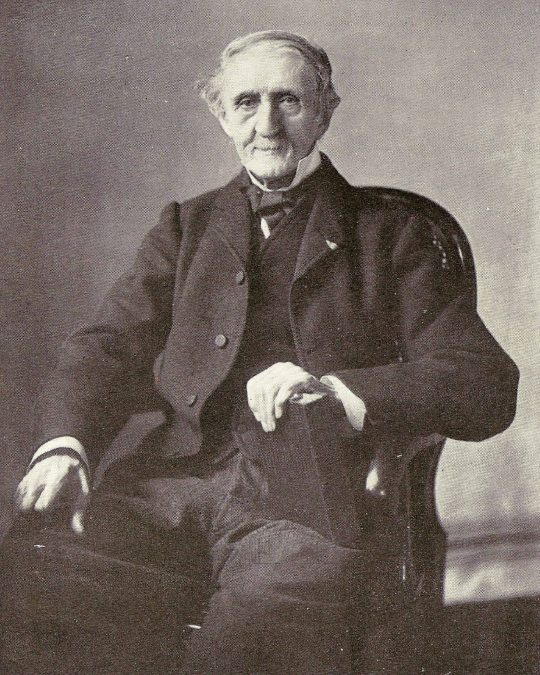
The British irrigation engineer who transformed India's famine-ravaged Godavari Delta, and was instrumental for the Brethren Movement in India
The British irrigation engineer who transformed India's famine-ravaged Godavari Delta, and was instrumental for the Brethren Movement in India
In the Annals of missionary history of India, Sir Arthur Cotton’s name stands unique. Few years back in connection with my itinerary ministries, I could visit various places in and around the Godavari Delta region of Andhra Pradesh. I was wonder- struck at the richness of the land, the vast stretch of paddy fields and other cultivation around the Godavari Delta region. Around 200 years ago, the district of Godavari was a famine stricken and flood effected region and was one among the poorest districts of India. Poor families who could not afford to care for their own children, were sold in the market places. I found these facts in display of the ‘Cotton Museum’ at Dawaleswaram. Today it is one of the richest districts of India.
Sir Arthur Cotton worked day and night to make India a famine free country. I was told that he not only provided natural water, but also provided living waters to the hungry souls. Hundreds of souls were saved because of his missionary endeavor. He went in search of missionaries to evangelize India. He went all the way to Baghdad to bring A N Groves to India, the first missionary to India.
I could see his statues in various places in the Rajahmundry region, and that prompted me to do a research on the life and mission of Sir Arthur Cotton.
I could gather various information about him as a great irrigation engineer during the British Raj from Wikipedia. But his spiritual activities were not recorded in it. Finally, I could manage to get his biography written by his daughter Lady Elizabeth Hope. She beautifully narrates his love for God’s word, zeal for evangelization and his love for the poor and needy.
Sir Arthur Cotton worked day and night to make India a famine free country. I was told that he not only provided natural water, but also provided living waters to the hungry souls. Hundreds of souls were saved because of his missionary endeavor. He went in search of missionaries to evangelize India. He went all the way to Baghdad to bring A N Groves to India, the first missionary to India.
I could see his statues in various places in the Rajahmundry region, and that prompted me to do a research on the life and mission of Sir Arthur Cotton.
I could gather various information about him as a great irrigation engineer during the British Raj from Wikipedia. But his spiritual activities were not recorded in it. Finally, I could manage to get his biography written by his daughter Lady Elizabeth Hope. She beautifully narrates his love for God’s word, zeal for evangelization and his love for the poor and needy.
Lady Elizabeth Hope followed the footprints of her father and became a missionary. She actively involved in Temperance movement. (She claims to have an interview with Charles Darwin before his death. After his death she published the content of that interview, which denies his own theory of evolution and natural selection. Darwin then confessed his faith in the Bible. It created a great controversy in the scientific and theological circle. Darwin’s children denied such an interview. Details are available on the Wikipedia on Lady Elizabeth Hope).
History of G.D.M. written by E M Bromley and biography of A N Groves written by Robert Bernard Dann sheds more light on Cotton’s spiritual life.
I would be very happy to present this small article on the life and ministry of a great missionary, Sir Arthur Cotton to the English-speaking saints and at large to the brethren community in India.
Introduction
Sir Arthur Cotton was one of the most celebrated irrigation Engineer in India during the British era. Cotton devoted his life to the construction of irrigation and canals throughout India. The anicut* he constructed across river Godavari about 180 years ago, stands as an engineering marvel. (*a dam, found in streams in India, which serves to control the flow of an irrigation system) The anicut at Dhawaleswaram irrigates around 2000 square miles of richest alluvial land in the Godavari Delta region. He constructed it when India was lagging technologically far behind other countries. With a labour force of ten thousand people, he could complete the work within seven years. Andhra Pradesh is known as the ‘Rice Bowl’ of India, only because of the ceaseless efforts of Sir Arthur Cotton.Arthur Cotton could supply natural water to the famine stricken, drought and deluge affe-cted Godavari Delta region. East India Company appointed him as the Engineer of Madras group and asked him to uplift the economically backward Godavari region by harnessing natural water resources. He submitted a project report in the year 1844 for the development of Godavari region.
British Government in India publicly put on record the following tribute to Sir Arthur Cotton: “Colonel Cotton’s name will be venerated by millions yet unborn, when many who now occupy a much higher place in the public view, will be forgotten”. How true it is that even after 200 years, millions remember him and even go to the extent of adoring and worshipping him. A traveller along the east coast of Andhra Pradesh can never miss his statues. We will come across many statues of a horse rider along the east coast. In some places his statues were kept beside a Hindu god. Recently in 1998, his bungalow at Dhawaleswaram was converted into a Museum and named ‘Cotton Museum’.
Now, both Dhawaleswaram Barrage and Cotton Museum are places of tourist attraction. The museum houses approximately one hundred images and 15 machine tools that Cotton used while constructing the barrage in Rajahmundry from 1847 to 1852. In 1858 Cotton came up with furthermore ambitious proposals of connecting almost all major rivers of India and suggested droughtrelief measures by interlinking of canals and rivers. Now a days Government of India plans to interlink rivers which was long envisioned by Arthur Cotton. It was his dream to link all the rivers of India and make India a prosperous famine free country. He not only provided natural waters, but also gave ‘living waters’ to the people of Andhra Pradesh. He is aptly called as the ‘Missionary Engineer’ of India.
Family and early life
He hailed from an ancient Cheshire family that produced many eminent men for India. Arthur Cotton was born on 15 May 1803 at Combermere, as the tenth son of Mrs & Mr Henry Calvely Cotton. In 1818, aged 15, he was appointed in India as a cadet of the East India Company. He completed his training in December 1819, and was commissioned as Second Lieutenant in the Madras Engineer Group. In 1824 he fought in the first Burmese war. He was knighted in 1861 for his lifetime achievements.Arthur’s early life as well as future career owed much to the astute judgment and the careful training of his mother. Even during his nursery days, he enjoyed by playing making ‘canals’. He was a keen observant of water running in the gutter and loved playing on a rainy day by making small canals with the point of his stick.
Cotton’s spiritual encounters
While returning on a ship from the first Burmese War (1826) as a young lieutenant of twenty-three, God touched him. During the voyage, while sitting on the deck of the ship one evening, admiring the sea and the sky illuminated with stars forced him to think: “Who made these worlds? Upon whose handiwork am I gazing now? It is the work of God the great creator.” If there be a great Creator, if He made the world, the sun the moon, and the stars, what do I know about Him? Has He ever spoken? If so, what are His words? The Bible is the Word of God. I ought to read it; I should like to know what He says?” Immediately, he ran down and started in search for a Bible on board the ship. Officers and fellow passengers start mocking him. Finally, he managed to get one and started reading. From that very moment, he took a bold stand for Christ with his characteristic decision and energy. From that hour till the last day of his life, he kept reading The Bible regularly without fail. He came in contact with Daniel Poor, an American missionary, who passed on to him a small booklet ‘Christian Devotedness’ written by Anthony Norris Groves, a well known Brethren Missionary. This booklet was published in the year 1825. The message of A N Groves’s book is “The Christian motto should be Labour hard, consume little, give much, and all to Christ”. After reading the book he developed a deep desire to meet the author of that booklet someday.Marriage and Home life
While he was on a vacation to Australia, he met a young devoted Christian girl at Tasmania. She was holding Christian virtues such as self-denial and being kind to the sick and poor, living in the neighborhood. Her gentle smile and attractive manner won his heart. She found in him just what her heart needed - a wise Christian, a sympathizing friend and the sustainer of her heart’s desire. The young lady was Miss Elizabeth Learmouth. Soon they got engaged. Cotton used to fall sick frequently and so their union became a matter of great concern for her parents. They quietly grumbled : “To all appearance Cotton won’t live beyond two years”. Such was his poor health. Thanks be to God, as he and Elizabeth lived happily and even celebrated their Golden Wedding Anniversary and beyond.Cottons had a godly home and maintained high spiritual virtues. Playing cards was completely prohibited at home. Cotton always advised to read books of high spiritual values. When gold is available in plenty, why opt for silver was his oft repeated question to his family and friends. He exhorted to put on the whole armour of God that would enable us to stand against the wiles of the devil.
Sunday was always a very busy day for the family. There was a service for English people that begins at morning 6 o’ Clock, which helped them to avoid the afternoon heat. Cotton himself conducted the service, sang hymns, led in prayers and finally concluded with a sermon and prayer. His children were very happy to attend the Sunday Service.
Later on, one of his daughters Elizabeth Hope became very active in sharing the Good News of Jesus Christ and she spearheaded the Temperance Movement in Europe.
Cotton’s Vision for India
He had a great vision for India. He desired to make a famine free, poverty free, prosperous India. Secondly, he desired that the Good News of Jesus Christ should enlighten India. In 1858, Cotton was the first person, who suggested linking of major rivers of India and fought with British government to release financial support for this ambitious projects. Sadly, he did not succeed.In 1899, there was a great famine in India; it is estimated that about four million people died in that famine. He read about that famine during the last week of his life on this earth. He lamented and told his daughter, “If they had only taken my advice, given so many years ago, (1858) they would have saved fortunes, and gained further over and over again”.
Godavari was one of the poorest districts during Cotton’s time, but by implementing irrigation projects, he made it one of the richest districts in India.
Not only he was concerned about the physical poverty of the people of India but also their spiritual poverty. When he was on a vacation with his family in UK, he happened to attend a church missionary meeting. The message he delivered in that meeting and his strong passion for the perishing souls in India and his keenness to spread the gospel impressed his daughter. Also that sermon revealed a glimpse of his in-depth knowledge of the scriptures.
His daughter shared a remarkable testimony about her father’s zeal for evangelization. “He had the greatest love for Christian mission work; he hardly asked or knew the section of the Church of Christ to which the missionaries belonged; they were God’s servants; they were laboring for the souls of men; they were carrying the personal message of the gospel, with its present blessedness and its future joys, to those around us who knew not the gospel.
That was quite sufficient for him. The missionaries always had a ready access and a hospitable welcome when they came to their house. Many could tell of his loving gifts and self-denying kindness to them in their difficulties.” The brief narrative below may throw certain light upon the impact of Cotton’s vision and beginning of Brethren Movement in India.
a) His association with Anthony Norris Groves
Arthur Cotton was so much influenced by the booklet “Christian Devotedness” (Now e-copies are available on public domain) that he had a great desire to meet the author of the booklet.In the year 1830, he went to England on leave for two and half years. He returned to India in the year 1833. On his return journey he travelled through many countries in Europe, Africa and Asia. He also visited the Holy land, but was grieved to see idolatry in so called Holy Places in and around Jerusalem. He greatly rejoiced to see the Mount of Olives that reminded him about the glorious coming of the Savior. He travelled to Baghdad to meet Anthony Norris Groves via Damascus. While travelling along the desert terrain, his team went through untold sufferings. Finally, they arrived at the Baghdad Mission station.
Anthony Norris Groves was the first Brethren missionary who had gone outside of Europe to preach the Gospel and was not supported by any mission society. He set out as a missionary like Abraham to an unknown country, by faith. He looked to the Lord for all his material and spiritual needs. He is aptly called as the ‘Father of Faith Mission’. He left his lucrative dental practice in England and had been to Baghdad as a missionary in the year 1829. Another two more missionaries, John Vesey Parnell (Second Baron Congleton) and Dr. Edward Cronin later joined Groves at Baghdad. Unfavourable climate, rumours of war, hard hearted people, outbreak of unusual plague and Cholera forced the small missionary band finally to abandon Baghdad Mission in 1834.
Meanwhile (April 1833), Arthur Cotton arrived at the Baghdad Mission station when that small team of missionaries were passing through the hardship. Cotton, a military engineer was a Colonel of the British army, yet he was a fully committed Christian, whose job required frequent travel.
He took great interest in the gospel wherever he was stationed. When he heard from Groves the hard resistance from the Muslim majority for the gospel work in Baghdad, Cotton invited him to India where the field was ripe for the harvest. By a divine providence, the British Parliament had ‘allowed unrestricted missionary work’ in 1813 in India. Thus, a great door was wide open for the evangelization in the sub continent of India.
Norris Groves felt the need for a complete break at that point of time when he met Cotton. There was no doubt that India had always been a special interest for Groves. His earlier missionary vision and thoughts had indeed been directed to India, He had a great burden to develop the opportunities for evangelistic work in the TigrisEuphrates valley and the surrounding highlands. He thought of returning to Baghdad after surveying India and take up the task later.
b) Journey from Baghdad to Bombay
A N Groves considered the invitation of Arthur Cotton to British India as a God given opportunity to survey the field, ripened for harvest. He left his family in the care of Cronin and Parnells. It was on 21st May 1833, the day of Parnell’s marriage,A N Grovesset out with Arthur Cotton to India.So, it was in May 1833 Groves left Baghdad, boarding a boat down the Tigris with Colonel Cotton. A young Lebanese friend of Cotton, Mokayel Trad, an Arabic speaking member of the Greek Orthodox Church, also accompanied them. He was learning English and growing in his understanding of the gospel.
c) Cotton was sick near unto death
While writing about Epaphroditus, Paulspeaks about his sacrificial service for the Lord. It was true about Arthur Cotton also - “for the work of Christ, he was near unto death not regarding his life” he served others (Phil. 2:25-30).During his few days in Baghdad, Cotton was down with fever, and asthey were traveling his condition worsened. They sailed down the Persian Gulf asfar as Bushehr. The heat was oppressive and by the time Cotton was seriously ill with an “internal complaint”.
He fell sick near unto death, so that a coffin was constructed and all arrangements were made for his funeral. Groves took care of Arthur Cotton for two months. Both Groves and Mokayel nursed him to restoration. Day and night, they were fanning him and sprinkling him with water. Cotton later observed, “There can be no doubt that, under God, I owed my life to the incessant loving care and attention of my two companions”. Finally, Arthur Cotton and A N Groves reached Bombay port in July 1833.
d) The first Brethren Missionary to India
Arthur Cotton was the man whom God used for bringing Groves, the first Brethren missionary to India. It was Cotton’s desire to meet the author of the small booklet, in the course of time culminated in bringing Groves to India. Groves remarked upon this, “On surveying the way in which the Lord has led me, I am often struck with apparently trivial events on which the most important events in our history hangs”.After reaching Bombay, Cotton and Groves parted ways to accomplish their missions. Their hearts were knit together like David and Jonathan, in Christian bond as a result of those brief encounters. Groves proceeded to ‘‘survey’ the land with the Lebanese friend of Cotton, Mokayel Trad.
e) A N Groves’ itinerary during his first visit to India
A N Groves’ cherished desire for a long time had been to come to South India as a missionary. Finally, God granted his heart’s desire by the encounter with Arthur Cotton, detailed above.From Bombay, Groves and Mokayel proceeded to South India along the west coast in a boat. While they were moving slowly down the coast, both Groves and Mokayel were keen to learn languages. Mokayel helped him to learn Arabic and Mokayel tried to improve his English. During their journey they visited many places along the coast and came in contact with many Christians occupying military and administrative positions. They shared God’s Word to them. Everywhere Groves saw urgent need of Christian workers. During a week in Cannanore, Groves had the opportunity to preach every night at “the soldiers’ Chapel” from Colossians 3. He exhorted them to live a holy life. Groves and Mokayel continued southwards covering short distances each time. They visited Calicut, Cochin, Kottayam and Quilon. Many Christian families along the coast invited them to stay with them.
Finally, both of them reached a place called Palayankottai at Tirunelveli (Now in Tamil Nadu). There they met a senior CMS missionary Karl Rhenius and a young Indian Christian named John Christian Arulappan. John Arulappan later on went to become a great revival preacher. He became entitled to be called as the first Indian Brethren Evangelist who followed the principle of “Faith Mission”. [A N Groves became the mentor of John Arulappan, during Groves’ second missionary Journey. They got associated together in the evangelization work in South India for about twenty years.]
Groves travelled across India almost three thousand miles in fourteen months. From Bombay (Mumbai)he travelled up to the southern tip of India. From there to Tirunelveli, then inland to Tiruchirappalli and across to the southeast coast; then a brief visit to Ceylon (SriLanka).Groves and Mokayel met Daniel Poor, an American Missionary at Ceylon.[Poor was the missionary, who had passed on the small booklet by A N Groves to Arthur Cotton.] Mokayel desired to remain with Daniel Poor, so Groves returned to Madras alone. Then he travelled along the east coast up to the Ganges Delta; then inland to Varanasi and neighboring towns, he reached the great eastern capital, Calcutta. From there he took a boat upriver to Serampore and paid a Happy visit to the aged William Carey. During this trip he could visit Patna also.
After fourteen months of hectic journey from May 1833, A N Groves decided to return to England. From Calcutta he sailed down the eastern coast of India, then westward and finally on Christmas Eve 1834 he reached England. Groves visited India again on his second missionary trip in 1836. During that trip, Arthur Cotton sent an encouraging mail, informing Groves that Mokayel was on his way to Syria and Labanon “to preach the gospel in his own country”.
f) Search for missionaries to India
Antony Norris Groves shared his burden with many brethren in UK. He visited George Muller, at Bristol and shared the need of workers in India. George Muller had married Mary Groves, A N Groves’ sister in 1830. Muller identified Hermann Gundert, a young twenty two year old theology graduate, who was willing to serve the Lord in India.He had already spent some time studying Indian languages in London and Bristol. Later on he served as a language teacher for the Groves Family. Groves visited 44 Pioneer Brethren Missionaries Ebenezer Chapel at Barnstable, where Robert Chapman, known as the ‘Apostle of Love’ among brethren and a minister of the word of God, introduced two young men to Groves. They were William Bowden, a stonemason, and George Beer a shoemaker, whose wives both were named Elizabeth.All were in their early twenties, they were sturdy country people, not very well educated but more than willing to respond to the vision. Groves left for the vast unreached Godavari Delta on the South-East coast of India. Hermann Gundert was impressed and even surprised by the “simple eloquence and earnestness” of Bowden and Beer. A few others also joined this team. Finally, on March 1836, this perfect missionary team began their journey by a ship belonging to East India Company namely Perfect. They conducted Gospel meetings, prayer meetings and Bible studies even on board regularly.
Gundert was teaching Indian languages to the team. He had started teaching rudiments of Telugu to the Bowden and Beer couples even from the days at Barnstaple. After coming to India, Hermann Gundert travelled to Kerala and enriched Malayalam literature by publishing his monumental Dictionary. He was one of the founders of Basel Mission. Finally, in July 1836 after three months the perfect missionary team landed at Madras. Some of them proceeded to Calcutta. Before their arrival, Groves’ friends Parnell and Cronin came from Baghdad along with two sons of Groves to Bombay. All of them met together at Madras.
During the same period many young men came to India as missionaries. They were all influenced by the ministry of A N Groves. Brethren missionaries belonging to Groves team, Brice and Kalberer worked in Patna, Gaya and Aara (Bihar) in 1836. In 1870 a retired officer from England, Mr. William S. Body and his wife Ellen came to Jamtara (Santhal Parganas) and started a village school. But he went to be with the Lord in 1872. After the Home call of her husband Ellen married another missionary from Sweden Mr.Edward Cornelius, both of them together served the LORD in Jamtara area nearly half a century until Ellen was called Home in 1909 and Edward in 1916. So brethren movement took its roots in many parts of India from way back in 1836.
g) Gospel work in Godavari Delta
It was A N Groves who had recognized the need of Gospel work in Godavari Delta during his first visit to India in 1833. So, he can be called as the architect of Godavari Delta ministry which is now popularly known as ‘Godavari Delta Mission’ (GDM). Origins of GDM are 46 Pioneer Brethren Missionaries traceable to the Open Brethren Movement in England under the leadership of men like George Muller, Robert Chapman and Anthony Norris Groves. The two young men, William Bowden and George Beer of the team, reaching Madras with their families in July 1836, became the first Brethren missionaries. They became the founding members of GDM. As stated earlier, they began learning the rudiments of Telugu with the help of Hermann Gundert who was their fellow traveler in the team.Bowden and Beer families were ready to open their base in the Godavari Delta by mid - August 1836. Parnell (from Baghdad) offered to go with them and look for a house in the main town of Machilipatnam. Parnell introduced them to the English officials at Machilipatnam. Parnell’s family background opened doors for them. For a month he stayed as a guest of an army Major and his wife. During that period, they studied the Acts of the Apostles. On Sundays they remembered the Lord by breaking of bread, with open worship and extempore sermons by Parnell. He departed from the place after Bowdens and Beers got comfortably settled. Parnell travelled to north to investigate the possibilities for work in Bengal. The meetings which he started at Machilipatnam continued even after he left the place.
Machilipatnam was a large civil and military station and provided superior facilities for language studies, to which Bowdens and Beers applied themselves rigorously for some eight months. From the beginning, it had been their sole goal to locate themselves amidst the natives, farfrom the temptations of European society and to avoid getting diverted from their goal.
They found Narsapur as the final location, being their ultimate objective to identify with the natives. It was in Sir Arthur Cotton 47 April 1837, they reached Narsapur. Unlike in Machilipatnam, no European home opened its doors. With difficulty, they located an unoccupied ‘Dutch House’ having only walls and roof forshelter.All the doors and windows were dismantled and sold; the place was a little more than a shell. Human skeletons of those who had died due to famine that happened just before their arrival were found scattered around the house. When they reached Narsapur the festival of ‘Pushkaralu’, which was held once in twelve years, began. Thousands come to take bath in the banks of Godavari. This resulted in the outbreak of Cholera. Even under such depressing circumstances, Beer and Bowden labored in Narsapur and Godavari for Christ. In spite of the limited communication skills, they continued evangelistic work and tract distribution amongst the crowded pilgrims. Bowden later on moved to Palakollu and Beer continued in Narsapur. In Palakollu, Bowden found the people very tough and they blocked the gospel. On one occasion he kneeled down in the public street and cried, “O Lord, let Thy Word take hold upon these people”.
Troubled in the hearts, they spent a week in waiting on God with fasting and prayer to receive a definite token of His blessing. The Lord granted their plea and they got their first local convert - Kolah Atchamma, after six years of hard labour. An assembly got established in Palakollu in 1842.
As the ministry progressed in Narsapur they started an organization to handle the money that was coming for the missionary work in Godavari Delta region and named it as ‘Godavari Delta Mission’. Bowden and Beer had never intended to start a new Christian denomination. 48 Pioneer Brethren Missionaries But sad to say, today it has become a denomination and the members identify themselves as ‘GDM Churches’. They have huge Churches, but failed to follow the scriptural truths. They need leadership with spiritual visions.
The primary mission of the GDM was unquestionably evangelism. Intensive evangeli-zation was carried out by every GDM missionary. Considering the prevailing illiteracy, the missionaries then deemed it necessary to open simple primary schools where, at first, the Telugu New Testament, Pentateuch and Psalms formed the text book. Hardly three years after the arrival in India, George Beer established the Narsapur School in 1839. The motto of the school was “Bear the Cross – Wear the Crown”. Since then, schools have proved a fruitful means of winning many for Christ. George Beer did ministry in a wide area through visiting many festivals and distributing tracts and the scriptures. It was during one such visits, he suffered a sun stroke (because of excessive exposure to the sun) and was promoted to glory in 1853 at the early age of 41 years. After her husband’s home call Mrs. Beer committed herself to the school work. Later on, the Narsapur school got upgraded to the High School level. Among the accomplishments of the GDM, the Mission High School at Narsapur stands out as an outstanding example.
Dhawaleshwaram Anicut and Gospel Work
In his excellent project report in 1844 to harness Godavari water, Arthur Cotton called the ‘fertilizing fluid’ as‘liquid Gold’ and justified the need for construction of Godavari anicut before the House of Commons committee. He brilliantly argued with the following statement, “My Lord, one day’s flow in the Godavari river during high floods is Sir Arthur Cotton 49 equal to one whole year’s flow in the Thames of London”. Finally, the Dhawaleshwaram anicut project got sanctioned by the authorities in December 1846. Work commenced from April 1847.Throughout the project work, about ten thousand workers were employed. The project continued for seven years. Cotton noticed the need of sharing the Gospel to thousands in his labor camps. How one can remain indifferent to the claims of the Gospel of Jesus Christ, when such a good opportunity was available. He was searching for a capable worker to undertake the responsibility of evangelization in labor camps.
He was seeking God’s help for getting an Evangelist for this purpose. One day he saw a tall, well built, sun-tanned European moving among the workers. Though he was shabbily dressed, there was yet something appealing in him. The European could perfectly identify with local Dhawaleshwaram Anicut 50 Pioneer Brethren Missionaries people, in speech and habit; these captivated Cotton very much. Cotton was convinced that here was the very man he was seeking! A person who is keen to share gospel in the vernacular language; willing to spend and be spent in the quest for souls. ThusCotton encountered Bowden accidentally. Cotton gathered from Bowden about his acquaintance with A N Groves and how he had travelled to India. Cotton could see in Bowden the Evangelist, the right person for the work ahead.
Bowden in turn accepted the invitation of Cotton as a call from God. From Palakollu, Bowdens moved their family of five boys to Dhawaleshwaram. Cotton gave them a dwelling place near to the riverbank.
From camp to camp the untiring servant of God moved, proclaiming salvation by Jesus Christ to all, undeterred by the burning sun in the day, or bodily fatigue at night. On Sundays, when there was no work, he ministered to Europeans. The unfailing kindness and sympathy of the Cotton’s family sustained them. In one of his correspondence with Groves, Cotton wrote of both Bowden and Beer, “What a blessing for India if such men could be found everywhere”.
It is surprising if we take stock of their labour. According to the STEWARD ASSOCTION IN INDIA (SAI) report, today it has grown to around 400 Christian assemblies in East and West Godavari districts alone. SAI owns 365 properties or 22.28% of their total number of properties in these two districts alone.
Christ like Character of Cotton
He practiced Christian devotedness in his personal life. His Christ like nature was charming and drew others to Sir Arthur Cotton 51 Christ. When Christ saw a multitude who were hungry, he asked the disciples to feed. Cotton also was compassionate towards the hungry flock in this country. All his lifetime, he laboured to irrigate India, which sprang out of such a loving heart.Once he was travelling to Visakhapatnam in connection with building a church and developing the Vizag Port when he was trapped in a cyclone. Everyone panicked, but Cotton was calm and composed to the surprise of all.
He had to fight with Cobras, Cholera, Jungle fever and rough weather and unfavorable living conditions in Rajahmundry. He even lost one of his daughters due to Jungle fever when they were at Rajahmundry. He and his family left all the comforts of western life and suffered working through all these development initiatives for our country.
He gave Holiday on Sundays to all his workers. His love for labourers was commendable. He distributed two days’ salary on Saturdays, so that they can take complete rest on Sundays. He gave physical rests for recouping to those who carried heavy burdens and did hard labour. His kindness to the people of the country and to all who worked under him was extraordinary; he was beloved to all. He was a successful Engineer and a missionary; and can be aptly billed as a ‘Missionary Engineer’. For him there was no difference between secular and spiritual matters; he did everything as unto the LORD. His service was an outflow of Christian love.
Home call
After retiring from service in 1860, he moved to England because of the frailty of his body. God gave him a long life. Even after retirement, he was thinking and corresponding with others, to make India a famine free country.Most of the retirement life he spent reading The Bible. He was a keen student of Prophecy. One evening one of his children said to him, “You seem to be very fond of your Bible; I do not think you ever get tired of it”. He replied raising his hands and with impressive gestures: “I feel like a little child playing on the margin of a lake; all my life I have been studying this book, and Iseem hardly to have touched it yet. There are such depths and heights beyond all that I have ever seen or known.” Such was his love for God’s Word.
In July 1899, a few days before his home call he was talking to his wife Lady Cotton. On that morning he looked up at her with a strange but earnest expression on his face and said, “I have had such a wonderful night, a revelation, a manifestation of God to my soul. He showed me in a way that I could never describe the finished work of Christ upon the Cross, the completeness of salvation, all is done. I could never tell you what it was; no words can paint it.” On the following day also, he shared a similar experience with his wife.
Every moment of life, he desired to be absent from the body and to be present with the Lord. Finally, on 24th July 1899 he went to be with the Lord with “perfect peace” at the age of 96 years.
Bibliography
1. They were men sent from God by E M Bromley The Scripture Literature Press, 1937, Bangalore.
2. The Challenges of India by Fred K. A. Tatford Echoes of Service. 1. Widcombe Crescent, Bath, Avon, 1983.
3. Father of Faith Missions: The life and times of Anthony Norris Groves by Robert Bernard Dann, 2004.
4. General Sir Arthur Cotton: His Life and Work by His daughter Lady Hope. London. Hodder and Stoughton, 1900.
5. Arthur Cotton: Wikipedia.
6. Elizabeth Reid Hope: Wikipedia.
7. GDSA (Godavari Delta steward associations): Report.
8. Why India’s Farmers Continue to Revere Sir Arthur Cotton by Madras Courier, Biography / January 2017.
9. SIR ARTHOR COTTON by T. Shivaji Rao, Director, Centre for Environment Studies, GITAM ENGINEERING COLLEGE VISAKHAPATANAM.
10. A short history of the assembly work in North India by Santhosh Thomas - Published in 2012.
11. THE HISTORY OF ANDHRA PRADESH, AND THE ADVENT OF CHRISTIANITY IN ANDHRA PRADESH by Sivan Kumar Mallick published by academia.edu page 2.7.1.5.
This article originally appeared in the Harvest Times magazine's Feb, Mar, Apr 2018 issue.


Comments 1
To the people of India he was an irrigation Engineer, BUT in the sight of God Arthur Cotton was pre destined even when he was in his mother’s womb. Not only for Godavary Delta area but many parts of India he became a source of blessing by sending Bro, Norris, Bro, Gundert, Bro, Bowden, and Beer. Mokayel Trad for Lebanon. God’s ways are wonderful. Praise the Lord.