Psalm 51:13-17: Bill of Grace

The Sermon explores the climax of Psalm 51, where David confronts the “bill of grace.” Moving from a “garage of repairs” to the reality of restoration, it highlights that religious rituals and words cannot pay for sin. Ultimately, the only sacrifice God desires is a broken spirit and a contrite heart.
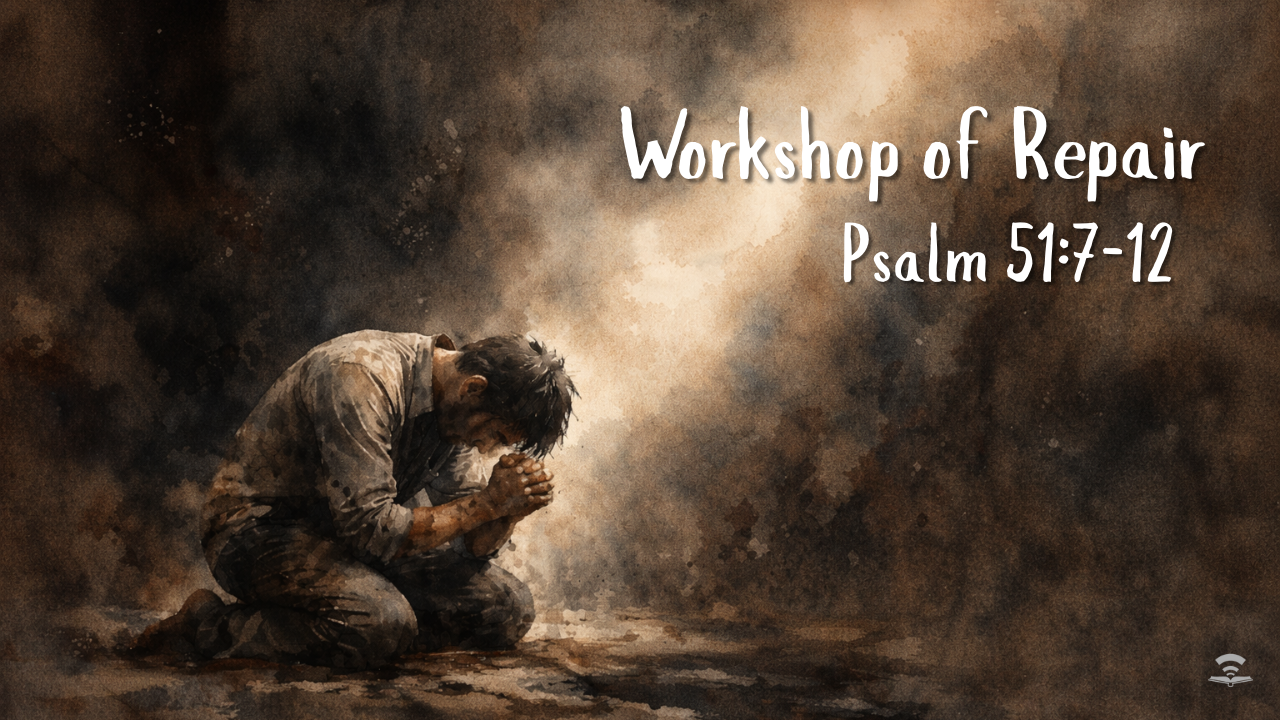
Psalm 51:7-12: Workshop of Repair

This sermon explores David’s plea for restoration in Psalm 51:7–12. It details a “workshop of repair” where the sinner seeks personal transformation, renewed fellowship, and escape from judgment. Ultimately, it emphasizes that complete restoration is a divine work of mercy, requiring a humble heart rather than human effort or merit.

Psalm 51:3-6 : Pit Stop of Repentance

This sermon on Psalm 51:3–6 explores the destination of God’s mercy: true repentance. It highlights David’s shift from denial to confession, acknowledging sin as an offense against God alone. By recognizing innate sinfulness and the need for inward truth, a repentant heart finds wisdom and transformation through God’s righteous judgment.

Psalm 51:1-2 : The highway of God’s mercy

Psalm 51, vs 1-2 explores David’s deep repentance, defining sin as rebellion, perversion, and offense. It emphasizes that God’s mercy is not based on human merit, but on His eternal covenant, tender compassion, and faithful character—offering bottomless grace and a “waste of love” even to the chief of sinners.

Ecclesiastes: Living Beyond Vanity

Solomon declares life’s pursuits as “futile” due to being forgotten and inevitable death. Yet, he advises enjoying God’s blessings within boundaries, working diligently, and fearing God. He cautions against self-righteousness and wickedness, urging repentance. Ultimately, true meaning is found not in worldly schemes, but in a repentant heart and obedience to God’s wise commandments.

Ecclesiastes: The Futility of Meaning

Solomon, the wealthiest and wisest king, embarked on a grand experiment, seeking meaning in life’s pleasures and achievements. Yet, he concluded all were vanity—futile and unsatisfying. His journey, marked by self-indulgence and a constant “I” focus, ultimately revealed that without God, all pursuits under the sun lead to the inevitable, frustrating reality of death and being forgotten.

Ecclesiastes: The Pursuit of Meaning

Solomon, the wisest and richest king, declares all earthly pursuits “vanity”—meaningless, like grasping smoke. His extensive experience, from immense wealth to vast wisdom, led him to this profound conclusion. He challenges us to look beyond fleeting worldly achievements, which ultimately lead to forgetfulness and dissatisfaction, and instead seek meaning in God.

Divine Pleasure and Paul

Paul’s ministry demonstrates three key aspects: his divine appointment as minister through grace, his willingness to suffer afflictions for the church’s sake, and his accomplishment of presenting believers perfect in Christ. Every believer receives a ministry and must faithfully fulfill their God-given responsibilities before Christ’s return.